
What a Real Estate Agent Website Actually Needs to Do in the DMV Market
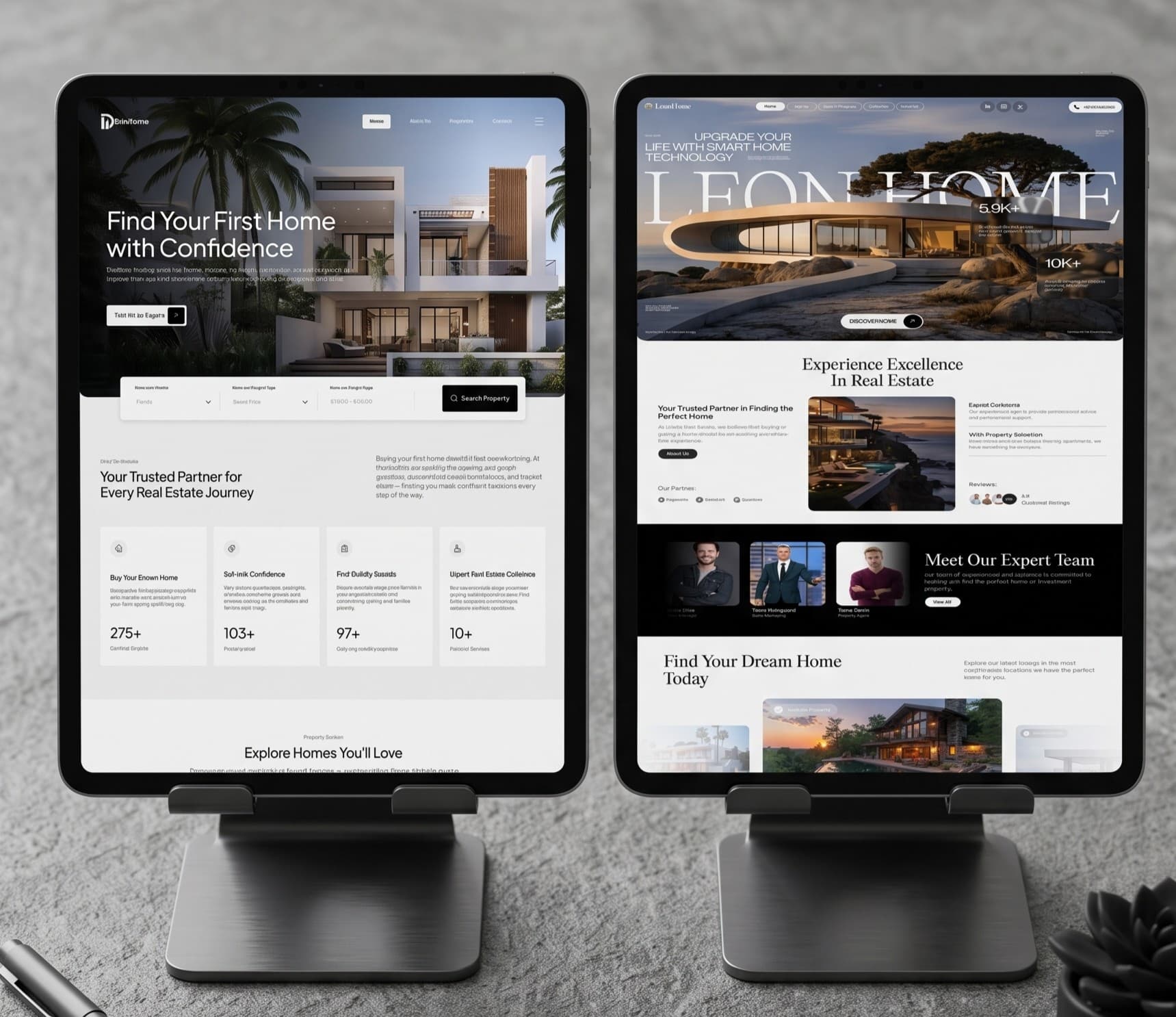
What a Real Estate Agent Website Actually Needs to Do in the DMV Market
We do not have a finished real estate client project to show off yet the way we can with a restaurant or an HVAC company, and we would rather say that plainly than dress up a demo as something it is not. What we do have is real market data and a clear point of view on what actually matters on an agent's website, built from the same approach we use across every industry we work in. This post is that point of view, and every number in it links to where we actually found it.
Most agent websites look the same, and that is the actual problem
There are thousands of agents across Maryland, DC, and Northern Virginia, and a large share of their websites come from the same handful of brokerage templates or platforms like KvCORE, Real Geeks, and Placester. Same layout, same stock photography, same IDX search box, same About page with a headshot and a paragraph about being passionate about real estate.
When every agent's site looks the same, none of them build any actual trust. A seller comparing three agents sees three nearly identical websites and ends up deciding based on a referral instead of anything the sites themselves communicated. A website that looks like everyone else's is not doing its job.
What the data actually says about how buyers search
According to the NAR 2025 Profile of Home Buyers and Sellers, 70% of buyers used a mobile device at some point during their home search, and 52% found the home they ultimately purchased through the internet. That second number matters more than it might look at first. It means half of all purchased homes trace back to something a buyer found online, not a yard sign or a flyer.
At the same time, First Page Sage's real estate benchmarks put the median visitor to lead conversion rate for real estate websites at 2.2%. That is a low number, and it tells you most agent websites are not doing the one job a website actually has, which is turning a visit into an inquiry.
Put those two numbers together and the picture is clear. Buyers are searching online in large numbers, and most agent websites are failing to convert the people who show up.
What is actually happening in the Maryland market right now
According to Redfin's Maryland housing market data, the median home price in Maryland sits at $463,449, with homes moving in a median of 44 days on market. That is a market with real activity and real urgency, which makes a slow-loading, generic website even more costly. Every day a site fails to convert a visitor into a lead is a listing appointment or a buyer consultation that likely went to a different agent instead.
What we would actually build differently
This is where our approach diverges from the template model, based on the same principles we apply across childcare, restaurant, and home service websites we have built.
Neighborhood specific pages instead of one generic service area
Real estate is hyperlocal. A buyer looking in Bowie does not care that an agent sold a condo in Bethesda. A dedicated page for each neighborhood or city an agent actually serves, with real market context, does two things at once: it proves local expertise to a human reader and gives Google something specific to rank for a search like "homes for sale in College Park."
Recent sales and transaction history on the homepage, not buried in a PDF
A generic bio and a stock skyline photo make an agent with fifteen years of experience look brand new. Real, recent transactions with real addresses belong where a visitor actually looks first.
Lead capture built into the page, not hidden behind a separate contact form
A home valuation form, a buyer consultation request, or a listing appointment request positioned where someone is already reading is the difference between a 2.2% conversion rate and something meaningfully higher.
What this means if you are an agent evaluating your own site
Open your current website on your phone and give it five seconds. Can a stranger tell you actually close deals. Can they tell what neighborhoods you actually know well. Is there an obvious next step besides scrolling to find a phone number in the footer. If the answer to any of those is no, that is very likely costing you inquiries every week, not just in theory but based on the same conversion data cited above.
Common questions
How much does a real estate agent website actually cost?
Pricing depends heavily on scope, from a Google Business Profile and directory cleanup on the lower end to a full custom site with neighborhood pages and lead capture on the higher end. We lay out the specifics on our real estate industry page.
Do referrals still need a website if most of my business comes from word of mouth?
Yes, because the first thing a referred client does is look you up. If what they find is a bare template or nothing at all, you have already lost some of the credibility the referral gave you before the first conversation happens.
What is the single highest impact fix for an existing agent site?
For most agents it is adding real, specific proof of recent work, actual sales and actual neighborhoods, above the fold, combined with a clear way to request a valuation or a consultation on every page instead of only the contact page.
We are not going to pretend we have a finished real estate client story yet. What we have is a clear read on the data and the same build process that already worked for Eri Star Cafe and Restaurant and My Heating and Cooling. If you want to see what that looks like applied to your own market, get in touch.